Facing today's world of endless scrolling, quick clips, fifteen-second fame, one thought keeps popping up for creators: what really matters now?
A door that opens wide - social apps let creators reach people fast. Yet a personal site still holds ground. Not every path leads through public networks. Some choose their own gate. A quiet space online can speak louder. Ownership matters when trends shift overnight.
A fresh dive into how artists’ websites matter by 2026 begins not with trends, but with real changes in tech. Tools evolve, yet reliance on big platforms grows tighter. Fans act differently now - what they expect shapes what sites must do. Owning audience data? That’s becoming non-negotiable. Survival over time hinges less on viral moments, more on steady control of one’s digital ground.
The Evolution of the Artist Website
Historically, artist websites served as:
- Digital press kits
- Tour and merch hubs
- Fan communication channels
Back then, around the 2000s, having a website meant you were truly present online if you were an artist. Since those days, social media took over most of what websites did - and usually faster. Still, today's online world changed how sites work - didn’t wipe out their reason for existing.
The Platform Dependency Issue
What makes artist sites so key by 2026? Dependence on outside platforms gets shaky. Stability shifts when rules change overnight. Owning your space means fewer surprises. Control stays in place even if trends flip. That foundation matters more than most realize.
Problems with relying solely on platforms:
- Algorithms control visibility: Reach fluctuates unpredictably.
- Account Risk: Accounts can be suspended or demonetized.
- Relevance: Platforms rise and fall in popularity.
- Data Silos: Who holds the fan information? It belongs to the service running the site. The creator does not get control over it.
Lesson from History: When things change fast, some disappear without warning. MySpace once ruled social media, then vanished nearly overnight. Vine built a creative community that simply stopped working one day. Even Facebook’s free reach for creators faded into almost nothing.
A site lives beyond any single device, built on code that travels freely.
Data Ownership: The Unseen Worth
Beyond 2026, control over information shapes how artists build their path. Ownership isn’t just legal - it defines independence.
Websites Enable:
- Email list ownership
- Fan segmentation by location or interest
- Direct Analytics: Happens straightaway without outside limits.
- Privacy Compliance: First-party data compliance with evolving privacy laws.
A fresh start means keeping what belongs. Artists decide who sees what when they own their site. Data stays put, not shuffled by unseen rules. Artists shaping lasting paths find that holding the reins matters more than most realize.
Search Visibility and Discoverability
Even though people spend lots of time on social media, they turn to search engines when looking for something specific. Professional stakeholders often look up:
- Artist bios
- Press photos
- Tour dates
- Official links
- Contact information
A properly optimized website ranks in search engines, establishes legitimacy, and centralizes authoritative content. Folks still lean on search in 2027, particularly when they're digging deeper than surface-level fan moments.
Websites vs. Link-in-Bio Tools
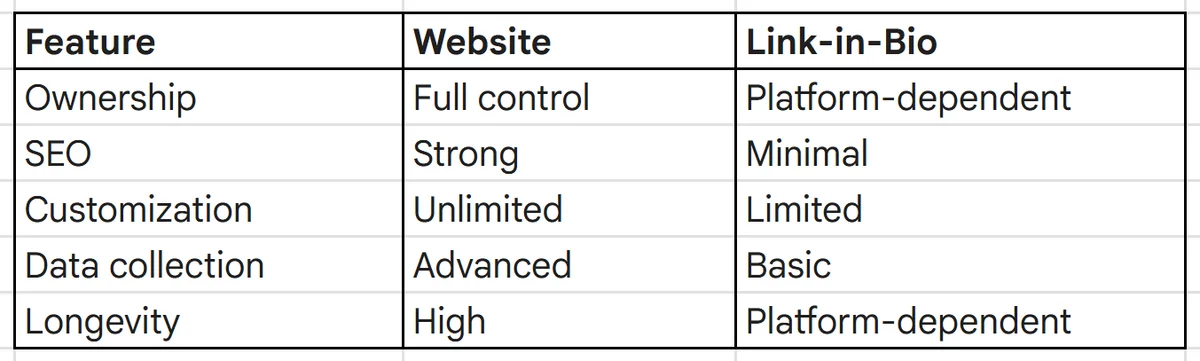
These days, almost everyone uses link-in-bio pages - still, nothing beats having your own site. What works now is not picking sides. It’s about blending them together, using the website as the base.
Professional Credibility and Real World Applications
A website acts like a first look at what an artist offers for those working in the field.
Who Uses Artist Websites:
- Booking agents & Festival programmers
- Sync supervisors
- Journalists
- Brand partners
A clear, professional website signals serious intent, organizational competence, and brand clarity. Often, one gets noticed simply because they stand out instead of blending in.
Monetization Beyond Streaming
Few musicians earn much from streaming. Artists keep more of what they earn when these systems cut out middlemen:
- Direct merch sales & Limited edition drops
- Fan memberships
- Ticket pre-sales
- Exclusive content access
- Educational products
Do All Artists Need Websites?
It changes based on where you are in your work life and what you want.
Artists Who Gain the Most:
- Touring artists and Independent professionals
- Sync-focused musicians
- Artists selling merch or memberships
- Long-term brand builders
Artists Who Might Wait:
- Hobbyists
- New makers figuring out their path
- Artists with minimal output
Artist Website Guidelines 2027
To be effective, artist websites should follow modern standards:
- Mobile-first design & Fast loading times
- Clear navigation
- Email capture
- SEO-optimized content
- Simple branding
The Research-Backed Conclusion
Is a website still essential for artists next year? Yes. While they are no substitute for social media, websites function as a central hub, a credibility signal, and a monetization engine.
When everything else shifts - rules, tools, platforms - an artist's own site stands steady. It answers to no update, no policy, no third party. While algorithms twist and trends fade, that space stays fixed. A quiet place built only for them, shaped how they want. Not borrowed. Not rented. Just theirs.


