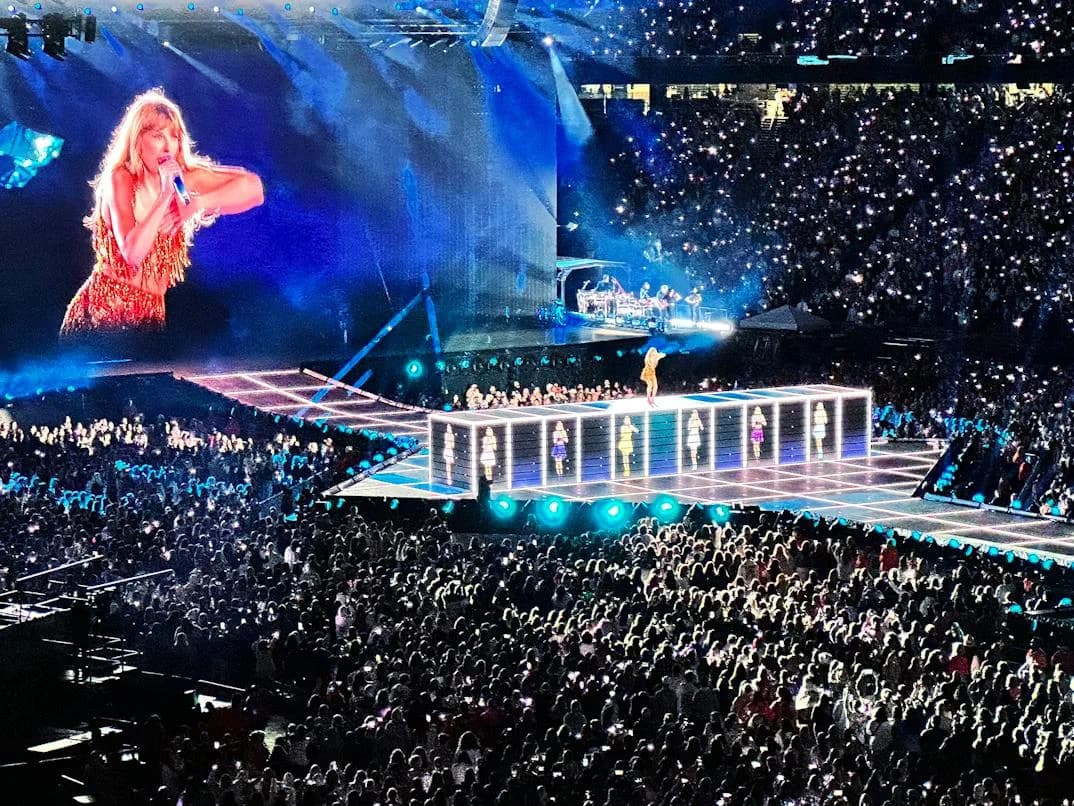
The Eras Tour grossed over $2 billion. Not because Taylor Swift suddenly got talented in 2023, but because she had spent 17 years doing specific things that most artists skip entirely.
Most artists treat a fanbase as something that grows passively through streaming. Swift built hers like a product manager builds software: with intentional architecture, feedback loops, and long-term thinking. The result is fans who buy tickets six months in advance, track down Easter eggs hidden in music videos, and treat her new releases like cultural events.
None of those strategies require a major label, a $500,000 marketing budget, or being a once-in-a-generation talent. They require understanding what actually drives fan loyalty and applying it consistently. This guide breaks down each tactic specifically, with examples you can translate to your own release cycle and audience size.
What You Will Learn
- Why storytelling structure matters more than raw emotional content
- How direct fan contact scales even with a small audience
- How to build an "era" framework around every release
- How to reward loyalty without giving away your income
- Why consistency over 2 to 3 years outperforms any short-term campaign
1. Build Your Narrative Before You Build Your Audience
Taylor Swift's first album was released when she was 16. But the songs were not about being a teenager in general terms. They were about specific people, specific places, specific moments. "Tim McGraw" is about a real relationship, with a real detail (a truck, a highway, a Tim McGraw song on the radio) that makes a listener feel like a witness rather than a bystander.
That specificity is not an accident of biography. It is a writing strategy. General emotional content ("I was sad, I got through it") creates passive listeners. Specific detail creates the sensation of being understood.
For your own work, the question is not "what emotion do I want to convey?" The question is: what is the one specific scene, image, or detail that carries that emotion? A bridge that breaks in winter, a voicemail you never deleted, a coffee shop where the argument ended. Listeners cannot connect to abstractions. They connect to the thing that makes the abstraction real.
This applies to your visual content and social media too. "Tour was amazing" generates no connection. "Played to 40 people in Cleveland in a bar that smelled like carpet cleaner, and someone cried during the second song" creates it.
2. Create Direct Contact Points at Every Scale
Before "secret sessions" became a marketing strategy, Swift was writing handwritten letters to individual fans, responding to Tumblr posts, and showing up in fans' comments. This was not a marketing department initiative. It was a one-person operation that she maintained consistently for years before she had a team.
The core principle here is that direct, personal contact from an artist creates a category of loyalty that paid advertising cannot replicate. When a fan gets a direct response from an artist, even a small one, that fan becomes an advocate. They tell people. They share posts. They buy tickets.
At your scale, direct contact is more achievable than at Swift's level, which means the return on investment is higher. Practical ways to build this in:
- Respond personally to the first 20 to 30 comments on every post, especially from early or consistent followers
- Use your email list to send one message per month that feels like a personal update, not a newsletter template
- Go live on Instagram or TikTok once a month with no formal agenda. Answer questions, play something unfinished, talk about what you are working on
- Send a direct message to anyone who shares your music organically. Not a template. One sentence that references what they said about it.
According to MIDiA Research, fans who have had direct contact with an artist spend 4.3x more on that artist's merchandise and tickets than passive followers. That number should affect how you spend your time.
3. Treat Every Release as a Distinct Era
The "Eras Tour" is a marketing concept that Swift has been executing since before it had a name. Every album has its own color palette, visual language, thematic territory, and associated merchandise. Fearless is golden fields. Red is scarlet and nostalgia. Reputation is black and snakes. Folklore is cardigan and cabin isolation.
This approach does three things that matter for any artist:
It extends the release cycle. An album without a defined era lives for six weeks. An album with a fully realized visual and narrative world lives for two to three years, because there is always something new to explore within it.
It gives fans something to organize around. Swift's fans pick their "era" the way people pick a favorite season or a favorite decade. That categorization creates community and ongoing conversation.
It trains fans to wait for the next one. If each era is distinct and fully realized, fans learn that the next release will be worth paying attention to. That anticipation is earned, not manufactured.
For an independent artist, a release era does not require a large budget. It requires decisions: what are the three colors that represent this project? What is the single image or scene that captures it? What is the one phrase or word that belongs to it? Make those decisions before release and use them consistently across every post, cover art, merchandise, and set design.
4. Reward Early and Loyal Fans Differently
Swift's secret sessions gave a small group of fans access to unreleased albums in her homes before any press had heard them. For an independent artist, the version of this is more accessible than it sounds.
The underlying principle is that your earliest fans, the ones who showed up before the algorithm pushed you to them, are your most valuable marketing asset. They are the ones who tell other people. If you treat them the same as someone who found you last week through a playlist, you waste that relationship.
Practical ways to create a loyalty tier:
- Use a Patreon or mailing list to give early fans access to demos, unreleased tracks, or behind-the-scenes footage before anyone else sees it
- Run a small physical event (house show, listening session, Zoom for remote fans) with a capped attendance for email subscribers only
- Send a limited physical item (signed lyric sheet, handwritten note, exclusive print run) to people who have been on your list since the beginning
- Credit specific fans publicly when they share your music to a significant audience
The return on this is not immediate. It is compounding. Someone who gets a signed lyric sheet from you before your first album becomes the person who buys every piece of merchandise you release for the next ten years. Our guide on setting up music subscription pricing tiers covers how to structure this into a sustainable income system.
5. Turn Artistic Decisions Into Public Narratives
When Swift announced she was re-recording her first six albums, she turned a business dispute with Scooter Braun into a narrative about ownership and artistic integrity. Millions of fans understood exactly what was at stake because she explained it directly and clearly in a Tumblr post.
The re-recordings are not just albums. They are a story about who owns your work and what you are willing to do to reclaim it. Fans bought Taylor's Versions not just because the music was good but because buying it meant something. They were participating in a narrative.
Most artists keep their business decisions entirely private. Swift turns them into shared experiences. You do not have to be in a dispute with a major label to apply this. You can share the story of why you chose one distributor over another, why you set ticket prices at a certain level, why you recorded an album in six weeks versus taking two years. When fans understand the reasoning behind your decisions, they feel like collaborators rather than consumers.
This also applies to creative setbacks. If a session does not go well, if a tour gets canceled, if a label pass comes in and you decided to stay independent anyway, sharing that story honestly builds more trust than a polished announcement of success. Our guide on building a content calendar as an independent artist covers how to structure this kind of ongoing narrative across platforms.
6. Control Your Output Cadence
Swift went nearly four years between Reputation (2017) and Folklore (2020). Then released Evermore six months after Folklore. Neither pattern is right or wrong. Both were deliberate.
The release cadence mistake most artists make is inconsistency driven by anxiety. Releasing too fast because they are worried about being forgotten, then disappearing for two years because they burned out. Neither extreme builds a loyal fanbase.
Consistency does not mean constant output. It means predictable patterns that fans can orient around. Whether that is one album per year, one single per month, or one project every two years, the pattern should be something you can maintain without burning out, and something fans learn to anticipate.
Before you set a release schedule, audit what you can actually sustain. If you are a solo artist with a day job, one finished single every six weeks is more achievable than one per month. A schedule you maintain for 18 months builds more audience momentum than an aggressive schedule you abandon after three months.
Our music release campaign planning guide covers how to build a sustainable pre-release timeline for each project.
7. Stay Consistent Across a Changing Identity
This is the hardest one to execute. Swift has moved from country to pop to indie folk to pop-country over 20 years. Each shift lost some fans and gained others. But the thread through every era is recognizable: the introspective lyrics, the specific details, the emotional directness, the sense that she is talking to you specifically.
For an independent artist, the tension is between experimentation and recognition. You should experiment. Staying static kills careers faster than shifting does. But your audience needs a through-line, something that stays constant across the changes.
That through-line is almost never sonic. It is usually thematic (what you write about), tonal (how you address the listener), or visual (a consistent aesthetic sensibility). Identify yours before you shift direction, because changing everything at once creates an identity gap that even loyal fans cannot bridge.
Common Mistakes That Stall Fanbase Growth
Optimizing for followers instead of relationships. A thousand followers who have never engaged with your content are worth less than 200 fans who reply to every post, attend every show, and tell their friends about you.
Treating early fans like strangers. The people who found you in the first year are your most valuable marketing asset. Treat them like it.
Releasing without a narrative context. A song released with no story around it competes on algorithm and chance. A song released with a clear narrative and visual world gives fans something to share and explain to others.
Changing direction without communication. If you shift genres or visual identity, tell your audience why before they find out by surprise.
Frequently Asked Questions
Q: How long does it take to build a loyal fanbase? The artists who consistently build durable audiences spend two to three years focused on relationship depth before they see significant audience breadth. Six months of consistent, direct engagement will produce results that feel disproportionately large compared to a year of passive posting.
Q: Do I need to be on every platform? No. Swift started on Myspace and moved to where her audience was. Pick two platforms where you can be genuinely active and commit to them. Being present on five platforms you barely use signals to fans that you are not paying attention.
Q: Is the "era" strategy only for artists who release albums? No. You can apply it to EPs, singles series, or even a season of content. The era is a framing device, not a format. Decide what the project is about thematically and visually, and build around that.
Q: How do I reward loyal fans without giving away income I need? Early access costs nothing. Personalized messages cost only time. Small physical items like signed prints or lyric cards are cheap to produce in small quantities. The high-cost loyalty programs (meet and greets, exclusive merchandise drops) come later, when you have the audience to make them financially viable.
Q: What if I only have 200 followers? 200 followers is plenty to apply every strategy in this guide. In fact, direct contact is easier at 200 followers than at 200,000. Swift started building these habits when she was playing 50-seat venues. The habits you build now are what scale.
Start With One Relationship
The Eras Tour did not start with a billion dollars in ticket sales. It started with handwritten notes to fans in 2006, responses to comments, and a deliberate decision to make every listener feel seen.
You do not need scale to start. You need the decision to treat your current audience, however small, with the same intentionality that Swift applied to hers. Pick one tactic from this guide, apply it consistently for 90 days, and measure what changes in how your audience engages.
For the promotion side of growing your audience, see our TikTok music promotion strategies guide and our Instagram music marketing guide. For building the direct fan income that supports long-term career sustainability, see our Patreon for musicians guide.


