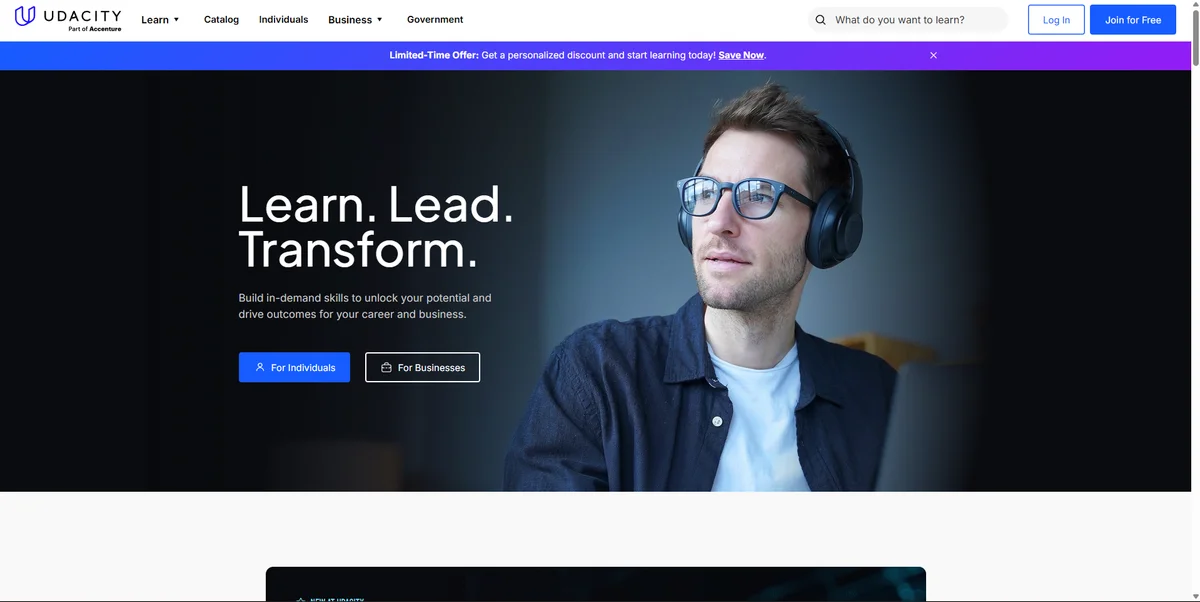
Udacity does not teach music production. There are no courses on Ableton Live, no songwriting workshops, no mixing tutorials. If you come to Udacity looking for music-specific training, you will leave disappointed.
That is not why musicians should use Udacity.
The reason to take a Udacity course as an artist in 2026 is to learn the business and technology skills that the music industry actually runs on: digital marketing, data analytics, product management, and programming. A musician who understands how to read audience data and run targeted ad campaigns is more valuable to labels, management companies, and music tech startups than one who cannot. These are skills that directly affect how your music reaches listeners and how much you earn from it.
This guide covers the Udacity programs most relevant to musicians and explains how each translates to your specific career situation.
What You Will Learn
- Which Udacity Nanodegrees are directly applicable to music career growth
- How digital marketing, data analytics, and product management skills translate to the music industry
- What Udacity Nanodegree certificates are worth and where they matter
- How Udacity compares to Skillshare and Udemy for musicians
- Career paths that open when you combine music knowledge with Udacity credentials
How Udacity Works
Udacity's flagship product is the Nanodegree, a project-based program that typically takes four to six months to complete. Unlike platforms where you watch videos and take quizzes, Nanodegrees require you to build real projects that are reviewed by industry mentors. That project-based structure is what gives Udacity credentials more weight than a simple completion certificate.
Nanodegrees cost between $400 and $600 per month, which makes them significantly more expensive than Skillshare or Udemy. The tradeoff is that you get mentor feedback, a structured curriculum developed with companies like Google and Bertelsmann, and a portfolio of completed projects to show employers or collaborators.
Individual courses (without the Nanodegree structure) are cheaper and sometimes free.
1. Digital Marketing Nanodegree: Run Your Own Campaigns
The Digital Marketing Nanodegree is the most directly applicable Udacity program for working musicians. It covers paid social advertising, content marketing, SEO, and marketing analytics at a level of depth that most artists never reach.
What you will learn:
- How to build and optimize paid campaigns on Meta, Google, and TikTok
- Audience segmentation and targeting (understanding who your actual listeners are, not who you wish they were)
- Content strategy and how to plan a content calendar around a release
- Google Analytics setup and reading data to make real decisions
- A/B testing methodology for ads and content
How this applies to your music career:
Most independent artists either pay someone to run their ads and have no idea whether they are getting results, or they run ads themselves without understanding the data. After this Nanodegree, you will know the difference between a $0.30 cost-per-click and a $1.20 cost-per-click, how to identify what creative is performing, and how to turn off campaigns that are burning money.
A typical artist running $300 in Meta Ads for a release without training generates roughly 500 to 800 Spotify clicks. The same $300 spent by someone who has done this Nanodegree and knows how to target, test, and optimize can generate 2,000 to 3,000 Spotify clicks. That difference compounds across every release.
Transferable career paths: Digital music marketer at a label or management company, freelance marketing consultant for independent artists, social media and ads manager for a music publisher.
For the music-specific promotion strategy to apply alongside this training, see our music marketing budget planning guide and our AB testing for music marketing guide.
2. Marketing Data and Technology: Read What Your Audience Is Telling You
The Marketing Data and Technology course is a shorter program that focuses on marketing measurement tools, audience tracking, and data-driven decision making. It is less comprehensive than the full Digital Marketing Nanodegree but more accessible if cost or time is a constraint.
What you will learn:
- How to use Google Analytics, Tag Manager, and similar measurement tools
- Audience segmentation: how to analyze who is listening, from where, and on what device
- Attribution modeling: which marketing touchpoints are actually driving streams and follows
- How to set up conversion tracking for release campaigns
How this applies to your music career:
Artists who use Spotify for Artists and Apple Music for Artists dashboards have access to meaningful data. Most of them do not know how to act on it. Understanding attribution tells you whether your TikTok content, your email list, or your paid ads are driving your streams. Once you know that, you can stop guessing about where to spend your promotion budget.
Transferable career paths: Music analytics specialist, digital marketing coordinator at a label, streaming data analyst at a music distributor.
3. Business Analytics Nanodegree: Build Financial Models for Your Career
The Business Analytics Nanodegree teaches data analysis, SQL basics, and data visualization using Tableau and Excel. It is designed for business decision-making, and that framing translates directly to music career management.
What you will learn:
- How to analyze performance data and identify trends
- Building dashboards that visualize streaming performance, revenue, and growth
- SQL fundamentals for querying databases
- Tableau for building data visualizations
How this applies to your music career:
If you are serious about music as a business, you need to understand your numbers: not just total stream counts, but revenue by platform, royalty collection rates, touring profitability, merchandise margins, and content ROI. Musicians who treat their career like a business look at these numbers the same way any business owner would. This Nanodegree gives you the tools to build those models.
A practical example: after 12 months of releasing music, you have data on which platforms are paying most, which markets are growing, and which content types are driving streams. Without analytics skills, that data sits unused in dashboards. With them, it tells you exactly where to focus your next six months.
Transferable career paths: Music business analyst at a label or publisher, operations analyst at a music tech company, independent artist manager.
For a broader guide to reading your streaming data effectively, see our music analytics guide.
4. Product Management Nanodegree: Run Creative Projects Like a Business
The Product Manager Nanodegree teaches how to take a project from idea to execution: defining requirements, building timelines, coordinating stakeholders, and shipping on schedule. It is designed for tech product managers, but the framework is directly applicable to music releases, tours, and creative projects.
What you will learn:
- Product roadmap creation: planning the phases of a project with clear milestones
- User research and persona development: understanding your audience's specific needs
- Cross-functional communication: coordinating between designers, developers, and stakeholders
- Agile methodology: iterating quickly based on feedback and data
How this applies to your music career:
A well-executed album campaign involves 15 to 20 distinct tasks over 12 weeks: recording, mixing, mastering, artwork, distribution setup, marketing material creation, editorial pitching, pre-save campaign, press outreach, and release day coordination. Most artists manage this informally and miss steps. Product management frameworks turn a chaotic release into a structured, repeatable process.
Artists who want to move into roles at music tech companies, streaming platforms, or music software companies will find that a Product Manager Nanodegree is a direct qualification for those positions.
Transferable career paths: Product manager at a music streaming platform or music tech startup, project manager at a record label or management company, tour operations coordinator.
5. Programming for Data Science: Understand the Tools Behind Your Data
Basic Python programming is not a career requirement for most musicians. But it does change how you interact with data. The Programming for Data Science with Python Nanodegree gives you enough technical knowledge to automate repetitive tasks, pull data from APIs, and understand how streaming platform algorithms work at a structural level.
What you will learn:
- Python fundamentals and data manipulation with pandas
- SQL for querying databases
- Data visualization basics
- How to automate data collection from APIs
How this applies to your music career:
Spotify, Apple Music, and YouTube all have APIs that expose data about your tracks. With basic Python skills, you can pull your own streaming data, build custom dashboards, and run analyses that the standard artist dashboards do not provide. You can also automate tasks like tracking playlist adds, monitoring mentions, or compiling weekly performance reports.
If you are interested in working at a music tech company, basic programming is often listed as a requirement for analyst and product roles, even non-engineering ones.
Transferable career paths: Music data engineer, music tech analyst, growth analyst at a streaming company.
Udacity vs Other Learning Platforms for Musicians
| Platform | Cost | Music Content | Certificate Value | Best For |
|---|---|---|---|---|
| Udacity | $400-600/mo | None (business/tech) | High for tech roles | Career changers, tech skills |
| Skillshare | ~$14/mo | Broad, uneven | Low | Quick practical skills |
| Udemy | $15-30/course | Good on DAWs | Low to moderate | Single topic deep dives |
| Berklee Online | $400-1,500/course | Excellent, structured | High (music industry) | Dedicated music education |
Udacity is the right choice when you want business and tech credentials that translate to real job applications or client pitches. It is not the right choice if you need music production or theory education.
For music production skills, see our music production 101 guide. For a comparison of Skillshare and Udemy specifically for music, see our guides on best Skillshare classes for musicians and best Udemy courses for musicians.
What Udacity Certificates Are Actually Worth
Udacity Nanodegree certificates carry more weight than most online learning credentials for one reason: project work. You graduate with a portfolio of completed projects that demonstrate specific skills, not just a certificate saying you watched videos.
Where Udacity certificates matter:
- Music tech companies (Spotify, SoundCloud, Beatport, Bandcamp parent Etsy Music, etc.) regularly hire for analyst and marketing roles where Nanodegrees are recognized
- Freelance client work where you need to show a client you can actually run their ad campaigns or manage their data
- Label and publisher roles where digital marketing and analytics skills are increasingly required alongside music knowledge
Where they do not matter:
- Traditional music industry roles (A&R, artist management, sync licensing) where relationships and taste are the primary qualifications
- Academic music programs
Frequently Asked Questions
Q: Is Udacity worth the cost for musicians?
A: Only if you have a specific goal that requires the credential or the structured project work. If you just want to learn digital marketing concepts, Skillshare or Udemy will cover most of the same ground at a fraction of the cost. Udacity's price is justified when you need the mentor feedback, the portfolio projects, and the recognizable Nanodegree certificate for a career transition or job application.
Q: Can a musician complete a Udacity Nanodegree while still working?
A: The recommended pace is 10 to 15 hours per week. Most Nanodegrees are designed for six months at that pace. It is manageable alongside part-time music work, but difficult alongside a full touring schedule. If you are in an active touring period, use cheaper platforms like Skillshare and save the Nanodegree for an offseason.
Q: Which Udacity program is most useful for an artist who wants to run their own promotion?
A: The Digital Marketing Nanodegree is the most directly applicable. It covers paid social, content strategy, SEO, and analytics in a way that translates directly to running campaigns for your own releases. Combine it with our music marketing budget planning guide for the music-specific context.
Q: Does Udacity teach anything about streaming royalties or music business?
A: No. Udacity's catalog does not include music industry content. For royalties, publishing, and music business education, use resources like our complete royalties guide, our music publishing explained guide, or dedicated music business courses on Berklee Online.
Q: What is the difference between a Nanodegree and a regular Udacity course?
A: Nanodegrees are structured multi-month programs with mentor review of your project work, career services, and a portfolio. Individual courses are shorter, cheaper, and self-paced with no mentor support or portfolio component. For career transitions or job applications, Nanodegrees carry more weight. For learning a specific skill without needing a credential, individual courses or cheaper platforms work fine.
Pick the Right Skill Gap to Address
Udacity is most valuable when you identify a specific skill gap that is limiting your music career and then use the most relevant Nanodegree to close it directly.
If your problem is that you have no idea whether your promotion is working, start with the Digital Marketing Nanodegree or the Marketing Data course. If your problem is that your releases are disorganized and you miss steps every time, the Product Management Nanodegree gives you a reusable system. If you want to work in music tech, programming and analytics skills are your entry point.
For the broader picture of building a sustainable music career across performance, recording, and business, see our bedroom producer to full-time artist roadmap.
External references: Udacity Nanodegree programs, Digital Marketing Nanodegree, IFPI Global Music Report 2025.


