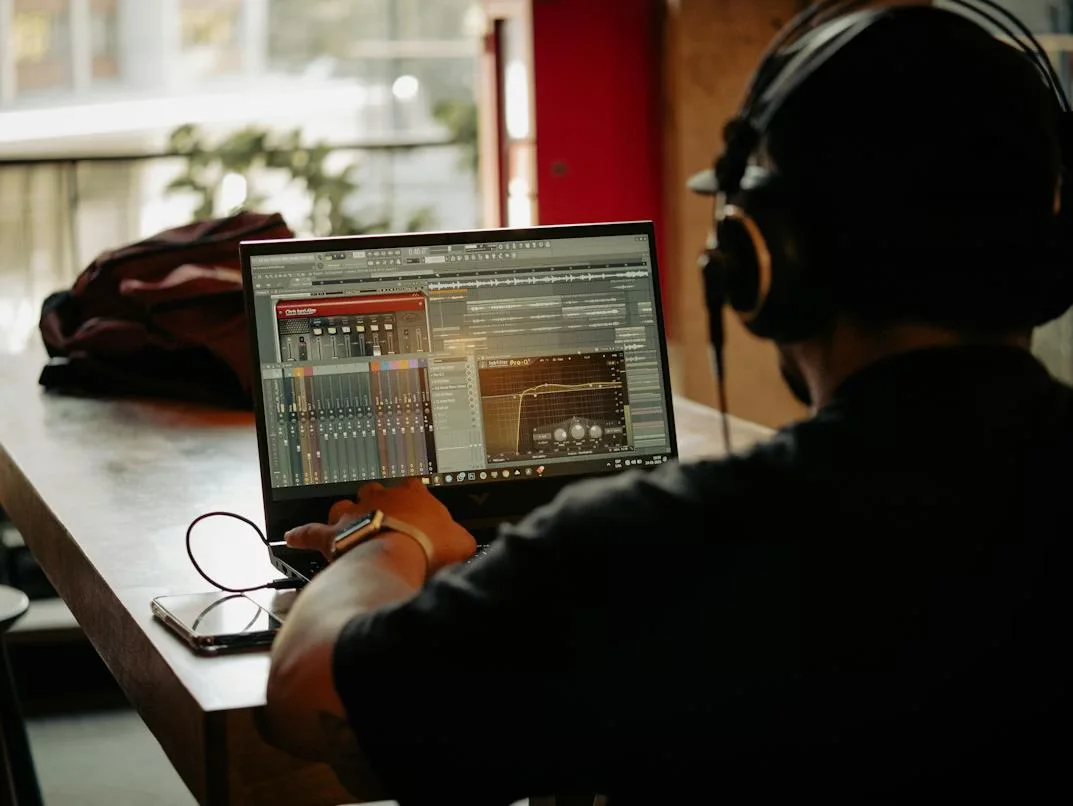
A producer who relies on one income stream is one bad month away from a problem. The producers who build sustainable careers treat their studio like a business with multiple revenue lines, not a single service offering.
The good news is that the toolkit available to producers in 2026 is genuinely wide. Beat marketplaces, sync licensing platforms, digital sample products, online teaching, and streaming royalties are all accessible without a label deal or major industry connections. The question is not whether the opportunities exist. It is which ones you are currently ignoring.
This guide breaks down every major income stream available to producers, with real earnings ranges, practical entry points, and what you actually need to start collecting money from each one.
What You Will Learn
- 8 income streams available to producers, with realistic earnings ranges
- Which streams are passive vs. active, and how to balance them
- How royalties work specifically for producers (it is different from artists)
- The most common mistakes that cost producers money they already earned
- How to build a sustainable income stack over 12 to 18 months
1. Selling Beats and Instrumentals
Beat selling is the income stream most producers start with, and for good reason. If you are making hip-hop, trap, R&B, or pop instrumentals, there is an active buyer market on platforms like BeatStars and Airbit.
The model breaks down into three tiers:
Non-exclusive leases grant limited rights to multiple buyers. The same beat can be leased to 10, 50, or 100 artists at $20 to $75 per lease. Each sale is small, but the beat keeps earning because exclusivity has not been sold.
Exclusive licenses transfer full rights to one buyer. Once sold exclusively, the beat is removed from the marketplace. Exclusives typically sell for $500 to $5,000 on independent platforms, and significantly more when sold directly to signed artists or through industry connections.
Custom commissions are beats built to a specific artist's brief. These command premium prices ($300 to $3,000+) because the labor is personalized, and you can negotiate co-writing credit and backend royalties if the beat becomes a released track.
What Producers Actually Earn from Beats
Top-performing BeatStars producers have reported $10,000 to $50,000 per month in lease income at scale. That level requires a large catalog (200+ beats), strong SEO on the platform, consistent tagging and mixing quality, and an established name. Producers just starting out should realistically target $200 to $800 per month from leases in the first year.
The fastest path to higher beat revenue is building an email list of buyers who have already purchased from you. A single email to 500 previous buyers announcing a new beat pack converts at a meaningfully higher rate than hoping for organic discovery.
2. Producing Records for Artists
Session and remote production work is one of the highest-earning income streams available, but it requires building relationships to access consistently.
For independent and emerging artists: Production fees typically range from $300 to $3,000 per song, depending on your track record, the scope of the project, and the artist's budget. Some producers charge a flat fee for full production. Others charge for beat plus additional production (arrangement, recording, mixing prep) as separate line items.
For signed or major-funded artists: Fees jump considerably. Mid-tier label projects commonly pay $5,000 to $25,000 per track. Major-label productions from established producers start around $25,000 and can reach $50,000 to $100,000+ per song for producers with proven chart credits.
Producer Points and Backend Royalties
Beyond the upfront fee, producers negotiate producer points, which are a percentage of the master royalty income from a released track. Standard producer points are 3 to 5 points (percentage of the artist's royalty share from the master recording).
If an artist has a 20% royalty deal with their label and you have a 4-point producer deal, you receive 20% of that 20%, or roughly 4% of total master revenue. On a track generating $500,000 in streaming revenue, your points earn you approximately $20,000 over the life of the recording.
Producer points are separate from any publishing split. If you contributed to writing the song (melody, lyrics, or top-line), you should also be negotiating a publishing co-write credit. See our music royalty splits guide for how those percentages are structured.
3. Streaming Royalties as a Producer
Producers earn from streaming, but the mechanism is different from artists and it is easier to miss if you are not set up correctly.
Master royalties flow from streaming to whoever owns the master recording. If you produced a track for an independent artist who self-released and you have a producer points agreement, you share in those master royalties. If the artist is signed to a label, your points come from the artist's royalty share after recoupment, which can take years to materialize.
Publishing royalties are separate and are the most frequently missed income stream for producers. If you contributed anything melodic or lyrical to a song, you may be entitled to a co-writing credit and a share of publishing income. This includes mechanical royalties from streaming and performance royalties from radio, TV, and live use. According to the Mechanical Licensing Collective, hundreds of millions of dollars in mechanical royalties go uncollected each year because producers fail to register their works.
What you need to collect:
- Register as a publisher with a PRO (ASCAP, BMI, or SESAC in the US)
- Register each song you co-wrote with the correct split information
- Register with the MLC if your music streams in the US
- Make sure your split sheet with the artist specifies any co-writing credit clearly
Use our streaming royalty calculator to estimate what your producer points and publishing share should generate at current stream counts.
4. Selling Sample Packs and Sound Kits
Sample packs are one of the few genuinely passive income streams available to producers. You build the product once, list it, and it continues selling without additional work.
The market for drum kits, melody loops, one-shots, MIDI packs, and preset banks is substantial. Major platforms include Splice, Loopmasters, and direct sales through your own website or Gumroad.
Realistic earnings:
| Product Type | Price Range | Monthly Passive Potential |
|---|---|---|
| Drum kit (500 samples) | $15 to $40 | $300 to $3,000 |
| Melody loop pack (50 loops) | $25 to $60 | $500 to $5,000 |
| Full production bundle | $50 to $150 | $1,000 to $10,000 |
| Splice subscription catalog | Revenue share per use | $200 to $2,000 |
The income ceiling scales with your brand. A producer with 100,000 YouTube subscribers releasing a sample pack will outsell an unknown producer by a wide margin, regardless of quality. Building the brand alongside building the product library is the long game here.
For a detailed breakdown of how to build and sell sample packs, read our sample packs and sound kits passive income guide.
5. Sync Licensing
Sync licensing places your music in TV shows, films, ads, and video games. It is one of the highest-paying income streams available to producers who build the right catalog.
Sync fees vary widely by placement type. A 30-second ad placement for a national brand can pay $10,000 to $150,000. A TV show background track pays $500 to $5,000. A trailer placement pays $5,000 to $50,000. A video game music license varies from $500 for indie games to $100,000+ for major releases.
Producers have a structural advantage in sync over vocalists. Music supervisors frequently need instrumental tracks for scenes where a vocal competes with dialogue. Ambient, cinematic, and textural instrumentals that would not stand alone as commercial releases can be highly valuable in a sync context.
How to get started:
- Submit to sync licensing agencies that represent producer catalogs (Musicbed, Artlist, Pond5)
- Build a catalog of production-quality stems and full mixes
- Ensure all samples in your tracks are cleared or replaced with original recordings
- Target non-exclusive library deals first to understand the market before signing exclusivity
For a full walkthrough on getting your first placement, read our sync licensing guide for independent musicians.
6. Mixing and Mastering Services
Many producers develop engineering skills naturally over years of self-recording and self-mixing. Those skills have a direct market value.
Mixing rates by market tier:
| Client Type | Mixing Fee | Mastering Fee |
|---|---|---|
| Independent artists (budget) | $100 to $400 | $50 to $150 |
| Independent artists (mid-tier) | $400 to $1,200 | $150 to $300 |
| Signed or funded projects | $1,200 to $5,000 | $300 to $800 |
| Major label referrals | $5,000 to $25,000+ | $800 to $3,000+ |
A producer who mixes 4 to 6 songs per month at $400 each generates $1,600 to $2,400 in engineering income alongside their production work. At scale, with a strong reputation, full-time mixing engineers in major markets earn $80,000 to $200,000+ per year.
The path to higher rates is portfolio development and client referrals. Mixing credits on released tracks that chart or stream well are your proof of concept.
7. Teaching and Content Creation
Teaching is the income stream that compounds most directly with your personal brand. Every student you teach becomes a potential buyer of your beats, sample packs, and future products.
Income by teaching format:
- One-on-one lessons: $50 to $150 per hour, depending on your credentials and market
- Group workshops: $100 to $500 per participant per session
- Online courses: $97 to $500 per course, scalable with no per-student labor
- YouTube: $3 to $7 CPM on music production content; a channel with 500,000 monthly views earns roughly $1,500 to $3,500 per month in ad revenue
- Patreon: $5 to $25 per patron per month for exclusive tutorials, templates, and feedback
A producer who combines YouTube content with a $199 Udemy course and Patreon at $10/month can build $3,000 to $8,000 per month in education income after 18 to 24 months of consistent output, without the income ceiling that limits session work.
The content creation path also generates algorithmic distribution for your beats, sample packs, and services. Producers like BeatsByDre Jr., Diablo, and Cymatics built eight-figure businesses largely on YouTube education content that drove buyers to their core products.
8. Running a Label or Production Company
The upper tier of producer income comes from owning a piece of what you create rather than selling your services. This means starting a publishing company, a sample pack brand, or a boutique label that signs and develops artists whose catalog you produce and own a percentage of.
Publishing company: You register as a publisher with your PRO, administer your own catalog, and potentially sign other songwriters. If you own 50% of the publishing on 20 songs that generate $2,000 per year each, that is $40,000 per year in passive catalog income that scales as your songs age.
Production company or boutique label: You invest in developing artists, own a share of the master recordings, and participate in streaming, sync, and live income. The financial risk is higher, but so is the upside. A single track you co-own that breaks on streaming at 100 million plays generates roughly $400,000 to $500,000 in master royalties alone.
For how royalties flow through label structures, read our record label guide and how record label distribution deals work for artists.
The Income Stack: Combining Streams Realistically
The producers who earn $100,000+ per year do not usually dominate one income stream. They stack three to five streams at manageable scale.
Here is a realistic income stack for a producer in year 2 of building their business:
| Income Stream | Monthly Estimate |
|---|---|
| Beat leases (100-beat catalog, active promotion) | $500 to $1,500 |
| Production fees (2 to 3 projects per month) | $800 to $3,000 |
| Mixing services (4 songs per month) | $600 to $1,600 |
| Sample pack sales (2 released packs) | $200 to $800 |
| YouTube + teaching (growing channel) | $200 to $1,000 |
| Streaming/publishing royalties (with 6-month lag) | $100 to $500 |
| Total | $2,400 to $8,400/month |
None of these numbers are guaranteed, and all of them require consistent work. But this is the practical range for a producer who is actively building across multiple channels rather than waiting for one income stream to pay off.
What to Register So You Get Paid
The most common way producers leave money on the table is by failing to register their works properly. According to the MLC's own reporting, a significant portion of the $500M+ they have collected in their first few years of operation was initially "unmatched" to rights holders.
Registration checklist for producers:
- Join a PRO as a publisher (ASCAP, BMI, or SESAC in the US)
- Register every song you co-wrote, including production-only contributions if the melody originated in your beat
- Register with the MLC at themlc.com for US mechanical royalties
- Use a split sheet for every session, even with friends
- File your copyright registrations with the US Copyright Office for tracks you own
For a full guide to royalty registration and collection, read All the Music Royalties You Should Be Collecting.
Frequently Asked Questions
Q: How much do music producers make per year on average?
A: There is no reliable industry average because income varies enormously by career stage, genre, and how many income streams a producer maintains. Anecdotally, working producers who have been in the industry 3 to 5 years and maintain multiple income streams typically earn between $30,000 and $120,000 per year. Full-time session producers at major studios in Los Angeles or New York can earn $150,000 to $500,000+.
Q: Do producers get royalties from Spotify?
A: Yes, but only if they have negotiated a co-writing or producer points deal and registered the music correctly. If you sold a beat as a non-exclusive lease with no co-writing credit, you do not receive streaming royalties from that track. If you co-wrote the song or have backend points, you do. Register your co-writing credits with your PRO and register your works with the MLC to ensure you receive mechanical royalties.
Q: Is beat selling still worth it in 2026?
A: Yes, but the market has become more competitive. The producers earning significant income from beats in 2026 either have strong brand recognition (typically from YouTube or social media), a large and well-organized catalog, or both. Entry-level leases for unknown producers are harder to sell now than they were in 2018. The ceiling is still high, but the floor requires more brand development than it used to.
Q: How do I get started in sync licensing?
A: Start by cleaning your catalog of any uncleared samples. Then submit to non-exclusive sync libraries like Musicbed, Artlist, and Pond5 to understand what supervisors are looking for. Build a dedicated sync-ready catalog of instrumental tracks with stems organized and metadata complete. It typically takes 12 to 24 months to see consistent sync income from a library submission strategy.
Q: What is the fastest way to make money as a producer?
A: Session and remote production work. A single indie production at $500 to $1,500 is accessible within your first year if you have the skills and can network with local or online artists. Beat leases generate money quickly if you have a catalog and marketing, but the per-sale amounts are smaller. Teaching and content creation take the longest to generate meaningful income but have the highest long-term upside.
Start With One Stream, Then Stack
The worst move is spreading yourself too thin across all eight income streams at once and doing none of them well. Pick the stream most aligned with your current skills and time, build it to a reliable monthly number, then add the next one.
For most producers starting out, that first stream is production work or beat leases. Once that is generating $1,000 to $2,000 per month, layering in sample pack sales, mixing services, or teaching becomes a reasonable next step.
Use our streaming royalty calculator to estimate what your current catalog should be generating in royalties, and our music royalty splits guide to make sure your split agreements protect your backend income.
Next Steps:
- Register your music with a PRO and the MLC to start collecting royalties you are already owed
- Read the complete guide to passive income through sample packs
- Understand sync licensing and how to get your first placement


