In-Depth Explanation
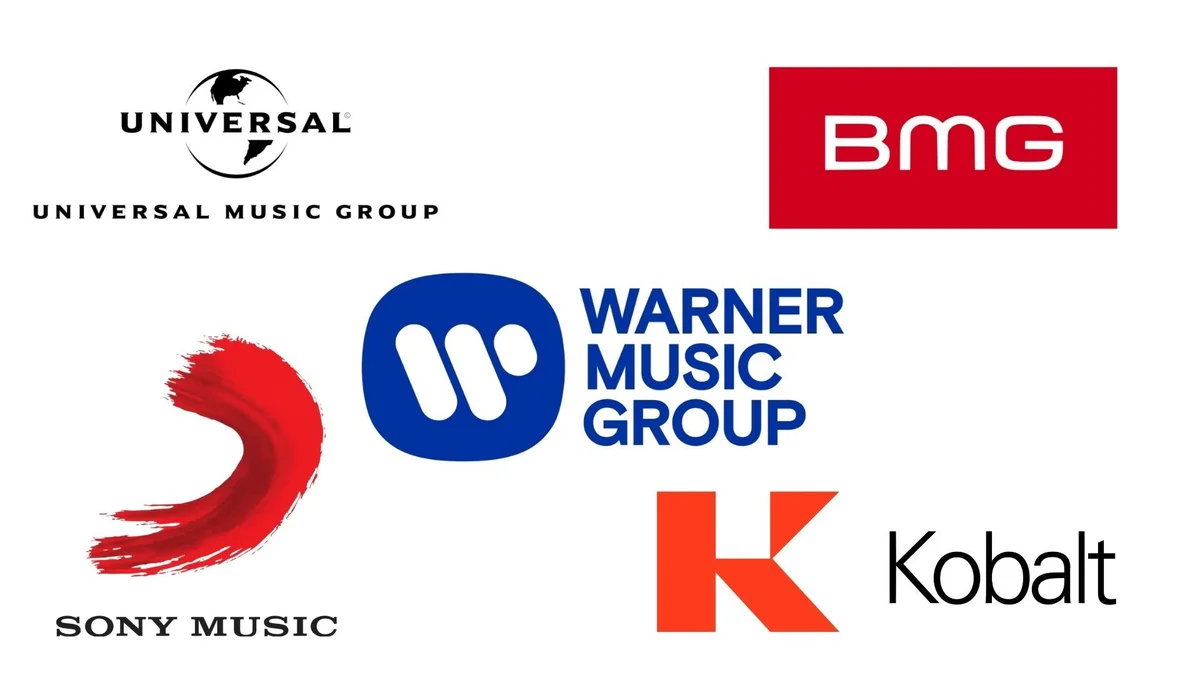
The Big Three refers to the three major music corporations that control approximately 78% of the global recorded music market: Universal Music Group (UMG), Sony Music Entertainment (SME), and Warner Music Group (WMG). Together they own the master recordings of nearly every commercially significant artist of the past century and dominate music publishing worldwide.
How the Big Three Works
Each of the Big Three operates as a corporate umbrella holding dozens of imprint labels, distribution arms, and publishing companies. They do not function as single record labels. They function as conglomerates.
Universal Music Group (UMG) holds the largest share at approximately 37.5% of global recorded music revenue as of 2025. UMG operates Republic Records, Interscope, Capitol Music Group, Def Jam, and Island Records. Its publishing arm is Universal Music Publishing Group (UMPG). Its independent distribution arm is Virgin Music Group.
Sony Music Entertainment (SME) holds approximately 23.8% of global market share. Sony operates Columbia Records, RCA Records, Epic Records, and Arista Records. Its publishing arm is Sony Music Publishing (the largest music publisher in the world). Its distribution arms include The Orchard and AWAL.
Warner Music Group (WMG) holds approximately 17.3% of global market share. Warner operates Atlantic Records, Warner Records, and Elektra Records. Its publishing arm is Warner Chappell Music. Its distribution arm is ADA (Alternative Distribution Alliance).
Global recorded music revenues reached $31.7 billion in 2025, according to the IFPI Global Music Report 2026, marking the eleventh consecutive year of growth. The Big Three captured the majority of that revenue.
The consolidation from six majors to three happened through mergers and acquisitions between 1998 and 2012. PolyGram merged with Universal in 1998. BMG merged with Sony in 2004. EMI was split and sold to Universal and Sony in 2012. Warner absorbed Parlophone from the EMI breakup. What remained were three conglomerates with unmatched leverage.
Real-World Example
In Q1 2026, Billboard reported that UMG's current market share by distribution ownership dipped to 30.76%, down from 36.82% in Q1 2025. Sony narrowed the gap. The independent sector commanded more than 44% of the U.S. market by label ownership.
This shift happened because major releases from artists on independent labels (like Zach Bryan on Warner Records and viral TikTok artists using distributors like DistroKid) captured a larger share of current consumption. However, UMG still leads in overall (catalog plus current) market share at approximately 39%.
The practical effect: when Spotify negotiates royalty rates, they negotiate primarily with the Big Three. If UMG threatened to pull its catalog (which includes The Beatles, Drake, and Taylor Swift), Spotify would lose a massive portion of its content overnight. This bargaining power lets the Big Three secure higher per-stream rates than independent labels can negotiate. Those rates flow through the Pro-Rata Model that determines how streaming revenue is distributed.
Why It Matters for Independent Artists
The Big Three structure affects you even if you never sign to a major label. Their dominance shapes the royalty rates you receive from streaming platforms. It influences which songs get added to editorial playlists. It determines whether your distributor (like The Orchard or AWAL) is actually owned by a major.
The "fake indie" phenomenon is the most relevant example. When a viral artist refuses a traditional record deal, Sony might offer them a distribution-only deal through The Orchard. The artist technically remains independent, but their revenue flows through Sony's infrastructure. Always research who owns your distributor before signing anything. Read more about this in our guide to record label distribution deals.
If you are considering a label deal, understand whether you are signing with a major label, a major-owned indie, or a truly independent company. Each comes with different levels of creative control, advance sizes, and recoupment terms. Use our Streaming Royalty Calculator to estimate what your music might earn regardless of which path you choose.