
A lyric video is not automatically the cheap placeholder before the "real" video. For a song built around words, fan singalongs, or search traffic, it may be the asset people replay most.
The wrong release order can still waste attention. If you publish an art track, lyric video, visualizer, and official video within 48 hours, you ask the same audience to choose between four nearly identical links. If you wait six weeks with no follow-up content, the campaign may lose momentum before the main video arrives.
The right order depends on your budget, how important the lyrics are, whether the official video is finished, and how many campaign moments your audience can support. This guide gives you a decision system rather than one rule for every artist.
What You Will Learn
- The difference between an art track, lyric video, visualizer, and official video
- When a lyric-first release creates a useful second campaign moment
- When the official video should lead
- How to space assets without splitting attention
- Which titles, metadata, and rights details matter
- How to choose an order by budget and audience
Know What Each Asset Does
An art track pairs the recording with cover art and metadata. YouTube Music commonly receives it through your distributor. It is a catalog asset, not usually a custom promotional production.
A lyric video presents timed words with designed text, animation, footage, or illustration. Its purpose is participation and comprehension. It must be accurate, readable, and legally cleared.
A visualizer uses repeated motion, spectrum graphics, particles, artwork, or audio-reactive imagery. It gives the recording a visual home without promising a story or performance. Learn how to make one in our visualizer guide.
An official music video is the primary performance, narrative, animation, or concept film approved for the song. "Official" describes its status, not its budget.
YouTube's music system may group art tracks and videos on an Official Artist Channel, but association and delivery depend on distributor metadata and channel setup. Do not manually upload an asset and assume it will replace a distributor-delivered art track.
Quick Decision Table
| Your situation | Release first | Follow-up |
|---|---|---|
| Lyrics drive fan interest | Lyric video | Official video 7 to 21 days later |
| Strong visual concept is ready | Official video | Lyric clip or visualizer later |
| No filming budget | Art track or lyric video | Social performance clips |
| New artist with small audience | One strongest asset | Several clips from it |
| Official video delayed | Lyric video | Official video when fully finished |
| Press campaign built around video | Official video | Behind-the-scenes and lyric clips |
| Song already gaining lyric searches | Lyric video | Official video as second peak |
Do not release a weak lyric video merely to fill a date. If the typography is hard to read or the timing is wrong, a clean art track is better.
Why a Lyric Video Can Go First
A lyric-first plan buys production time and creates a second reason to talk about the song. It works best when the chorus is quotable, fans ask what a line means, the language needs translation, or the official shoot requires more time.
Example: narrative video still in post. Release the master through your distributor on Friday. Publish a polished lyric video the same day or within the first week. Use it in email and search. Release the official video two weeks later after color, captions, and vertical clips are ready.
Example: singer-songwriter release. The words are the main experience. A lyric video using handwritten type and rehearsal footage may fit better than a costly narrative. The official video can be a later live performance rather than a competing version.
Example: international audience. Start with the original-language lyric video, then add accurate captions and translated subtitles. Do not burn several languages into a crowded frame. Translation creates accessibility and may support search without forcing viewers to read tiny text.
A lyric video is also easier to revise before publication than a full shoot. That is not permission to rush. Check every word against the approved lyric sheet, confirm featured artist names, and proof punctuation on phone and television screens.
Why the Official Video Can Go First
Lead with the official video when it is the campaign's strongest idea, press outreach depends on it, or the artist needs a clear visual introduction. Splitting early attention with a lyric video may weaken the moment.
A premiere works only if people have a reason to gather. Prepare the thumbnail, description, captions, artist links, moderator, email, and social assets before scheduling it. If your audience is small, a standard public upload can be less awkward than an empty countdown room.
Official-first also makes sense when:
- A guest, dancer, director, brand, or location adds a news angle
- The video changes how listeners understand the song
- You need visuals for an EPK, booking pitch, or press campaign
- The release has paid media budget focused on one destination
- The lyric video would repeat the same footage with text over it
Follow with lyric-led Shorts, a behind-the-scenes edit, a live version, or a visualizer rather than another full upload that serves the same purpose.
Use a Hybrid Release Sequence
A balanced campaign can separate catalog delivery from promotional events.
| Timing | Asset | Main job |
|---|---|---|
| Release day | Distributor art track and song | Availability and catalog metadata |
| Day 0 to 3 | Lyric video or official video | First intentional visual event |
| Day 3 to 10 | 3 to 5 vertical clips | Discovery and repeated hooks |
| Day 7 to 21 | Second major video asset | Renewed attention |
| Week 3 to 5 | BTS, live take, fan edit | Extend the story |
| Ongoing | Shorts, Canvas, playlists | Catalog discovery |
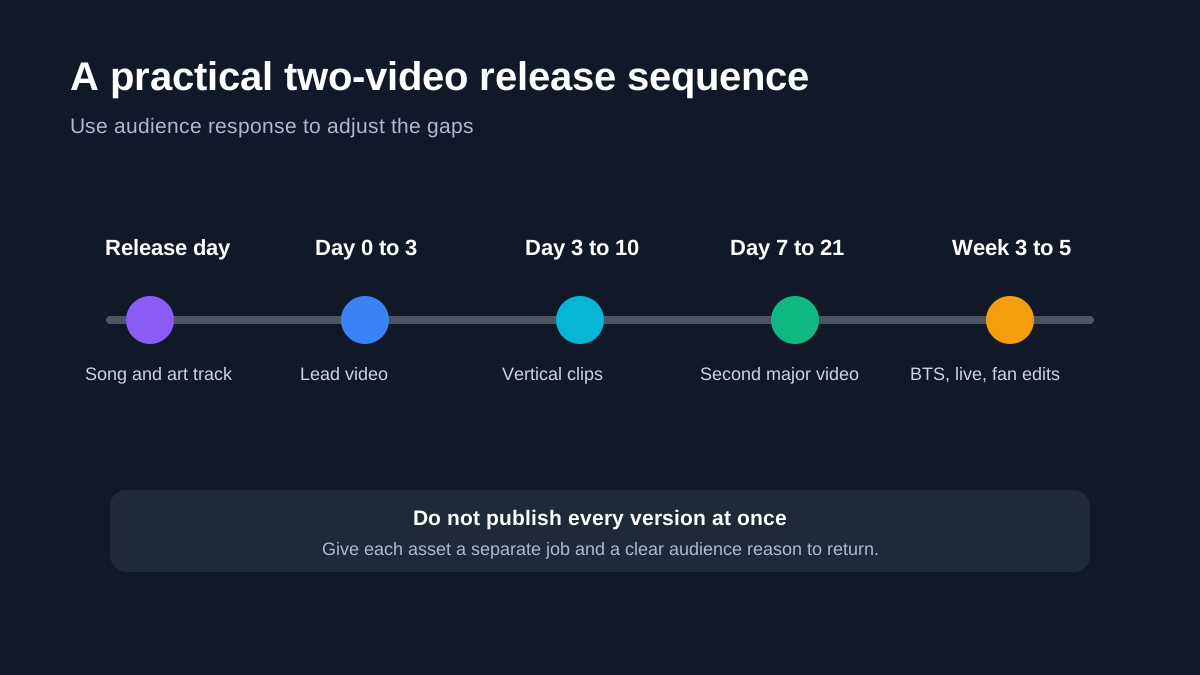
This is a planning example, not an algorithmic guarantee. Check your analytics. If the first asset is still growing, do not interrupt it solely because a calendar says day 14. If response is weak, diagnose thumbnail, opening, audience fit, and distribution before uploading another expensive asset.
YouTube for Artists recommends continued Shorts and fan engagement after release, plus review of first-time viewers, returning viewers, video engagement, and fan activity. See its post-release strategy.
Compare Cost and Production Time
| Asset | DIY range | Hired range | Typical work |
|---|---|---|---|
| Art track | Usually distributor delivery | Included or plan-dependent | Metadata and artwork |
| Simple lyric video | $0 to $150 | $150 to $750 | Type, timing, template, export |
| Custom animated lyric video | $100 to $1,000 | $750 to $5,000+ | Illustration, animation, revisions |
| Visualizer | $0 to $300 | $200 to $2,000+ | Motion design, loop, audio reaction |
| Official performance video | $200 to $2,000 DIY | $1,000 to $20,000+ | Shoot, crew, location, post |
Ranges vary by market, complexity, artist approvals, and rights. A custom hand-animated lyric video can cost more than a simple performance shoot. Define the work rather than assuming the label determines the price.
For a full production breakdown, see how much a music video costs and how to make one on a low budget.
Make the Lyric Video Readable
Use a type size that works on a phone. Keep lines short. Maintain enough contrast over every background. Leave text on screen long enough to read naturally, and time it to vocal delivery rather than only the beat.
Avoid placing important text at the extreme edges where mobile interfaces may cover it. Check spelling against the final recording, especially ad-libs, repeated words, featured verses, and clean edits. If the recording contains explicit language, label the upload correctly and prepare a clean version where needed.
Do not use unlicensed fonts, stock video, photographs, templates, or generated likenesses. Keep receipts and license records. Your right to distribute the song does not grant rights to every visual asset you find online.
Title and Describe Each Version Clearly
Use a consistent title pattern:
- Artist - Song (Official Music Video)
- Artist - Song (Official Lyric Video)
- Artist - Song (Official Visualizer)
- Artist - Song (Live Performance)
"Official" should mean the artist or rights holder authorized the upload. Do not stuff the title with mood phrases or unrelated search terms.
In the description, place the main listening link and credits near the top. Add songwriters, producer, director or animator, label or distributor, copyright lines, social links, and lyrics where appropriate. Add captions separately even when words appear on screen. Captions help accessibility, translation, and viewers who cannot read moving text comfortably.
YouTube says tags mainly help with common misspellings and otherwise play a limited role in discovery. Read YouTube's current tag guidance instead of filling the field with unrelated phrases.
Choose by Audience, Not Ego
Ask where fans already respond. If comments quote lines, lyric-first has evidence. If performance clips earn the strongest completion and saves, official-first may fit. If most discovery comes from playlists and listeners do not know your face, a strong official video can introduce the artist.
Check these numbers after each asset:
- Impressions and click-through rate
- Average view duration and audience retention
- Returning versus first-time viewers
- Comments that quote lyrics or mention visuals
- Traffic to streaming links
- Subscriber growth and repeat views
- Short-form uses, remixes, saves, and shares
Do not compare raw view counts without traffic source. A paid campaign, embedded press page, and organic search audience behave differently.
Related Resources
- Set up your YouTube channel for music releases
- Grow a music audience with YouTube Shorts
- Use Reels to promote new music
- Learn whether Spotify Canvas helps streams
- Plan the complete release campaign
Frequently Asked Questions
Q: Will a lyric video hurt the official video's views?
A: It can split attention if both target the same audience at the same time. Space them and give each a different job. Use one as the launch event and the other as a later reason to return.
Q: Should I upload my own art track?
A: Usually your distributor delivers art tracks to YouTube Music. A separate manual upload may create duplicate catalog assets. Ask your distributor how it handles YouTube Music and Official Artist Channels before uploading.
Q: Can a lyric video be the only video?
A: Yes. A well-designed lyric video can be the primary visual for a lyric-led track. Support it with performance Shorts, stills, and a Canvas rather than making an official video solely because it feels expected.
Q: How long should I wait between videos?
A: Seven to 21 days is a practical planning range, but audience response should decide. Let a growing asset breathe. If the official video is not good enough, delay it rather than meeting an arbitrary gap.
Q: Should both videos use the same footage?
A: They can, but each needs a distinct reason to exist. Reusing every official shot behind animated text may feel redundant. Artwork, alternate takes, rehearsal material, or a different visual system gives the lyric version its own identity.
Q: What if I can afford only one?
A: Choose the version that best expresses the song and produces the most reusable assets. A performance-led artist may gain more from an official video. A writer with a strong chorus may gain more from a lyric video plus social clips.
Pick the Lead Asset Now
Write "lyrics," "performance," "story," or "visual identity" at the top of your release plan. Choose the video type that serves that word best, assign it the main release moment, and schedule every other asset to support it rather than compete with it.


